



Site surveys help identify the best locations, viewing angles, lighting conditions, and potential obstructions before sign installation. By evaluating these factors in advance, businesses can achieve better sign placement, stronger visibility, and easier customer recognition.
Introduction
A well-placed sign can make a powerful difference in how customers notice and remember a business. However, choosing the right location isn’t simply about finding an open wall or roadside space. A professional site survey evaluates visibility, viewing angles, traffic patterns, surrounding structures, lighting, property conditions, and potential obstructions before installation begins. As a result, businesses can make informed decisions about sign size, height, orientation, and placement. Moreover, careful planning helps prevent costly installation changes later. With accurate site survey information, sign professionals can create signage that attracts attention, communicates clearly, and stays visible to the intended audience.
Start With the Site, Not the Sign
A great sign can lose impact when it lands in the wrong spot. A professional signage site survey studies the property before installation, helping teams understand sightlines, traffic patterns, building features, lighting, and access. Instead of guessing, businesses can make informed placement decisions that support readability, recognition, and customer navigation.
Measure Visibility From Real Viewing Angles
People rarely view a sign straight on from a distance. A site survey checks visibility from sidewalks, parking areas, driveways, entrances, and approaching roads. Surveyors can identify blocked sightlines caused by trees, poles, vehicles, neighboring structures, or architectural features. That information helps position signage where intended audiences can notice it.
Match Sign Size to the Environment
Sign size affects visibility and visual balance. During a site survey for signs, professionals evaluate viewing distance, surrounding scale, available mounting space, and visual clutter. These observations help determine whether a sign needs greater height, width, contrast, or dimensional depth. The result is clearer communication without overwhelming the property.


Evaluate Lighting Before Installation
Lighting can transform a sign after sunset, but only when planned around actual site conditions. Sign survey services can document existing light levels, nearby fixtures, shadows, power access, and potential glare. This helps teams choose practical illuminated or non-illuminated solutions while considering neighboring properties, pedestrian comfort, and consistent nighttime visibility.
Account for Building and Mounting Conditions
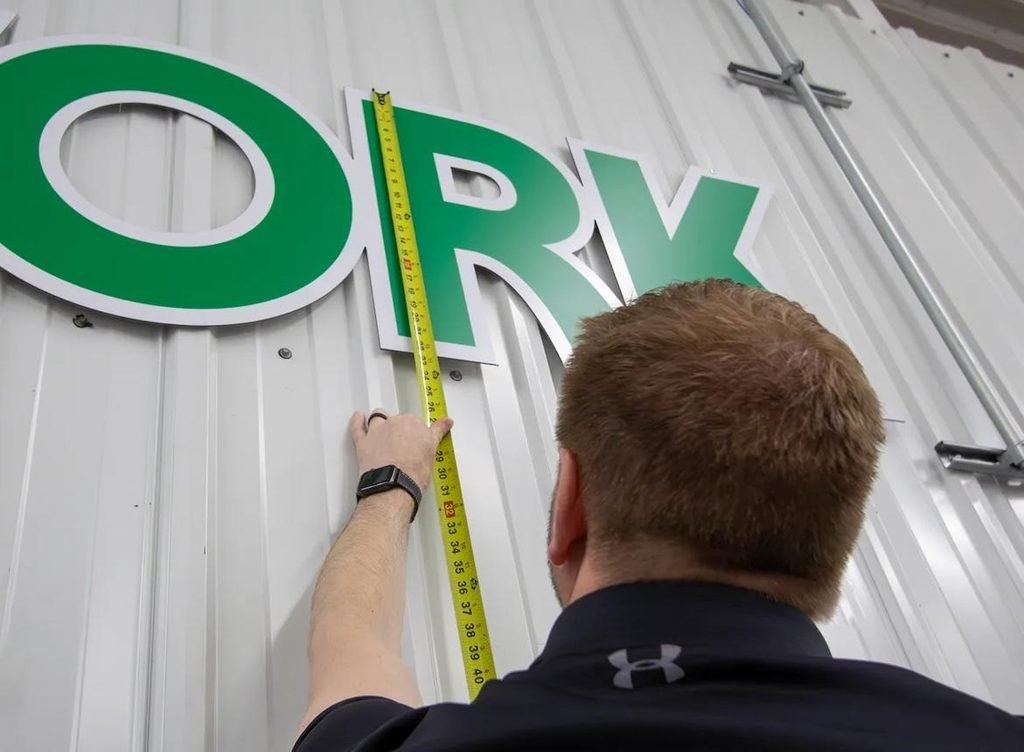
A sign may look perfect in a rendering yet face conditions in the field. Surveyors inspect walls, columns, facades, mounting surfaces, clearances, and structural considerations before installation. They can document obstacles that affect attachment methods. This information helps fabricators and installers prepare appropriately, reducing avoidable adjustments, delays, and installation complications.
Key details often documented include:
- Wall or facade dimensions and material
- Existing mounting points and obstacles
- Sign height and available clearances
- Access requirements for installation equipment
Improve Wayfinding and Customer Movement
Effective signage does more than display a name; it guides people through a property. A survey can examine entrances, exits, parking routes, pedestrian paths, loading areas, and decision points. By understanding movement patterns, businesses can place directional signs where questions naturally arise. Wayfinding can make unfamiliar locations easier to navigate.
Prepare for Safe, Efficient Installation
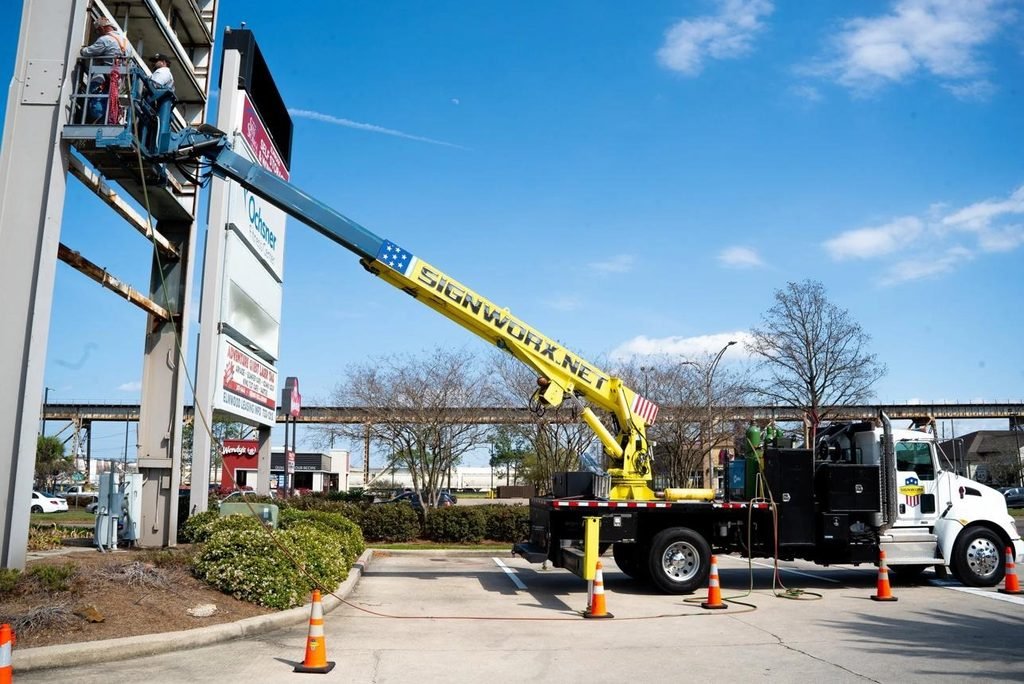
A sign installation survey looks beyond placement to the work required onsite. Teams can document lift access, working height, equipment needs, surface conditions, traffic concerns, and restricted areas. Early planning helps installers arrive prepared and coordinate work safely. It also reduces the chance that a site condition will disrupt installation.
Support Accurate Fabrication and Project Planning
Field measurements give designers, fabricators, project managers, and installers reliable information to work from. Surveys can record dimensions, photographs, mounting points, electrical observations, and site-specific notes. With better field data, teams can coordinate fabrication and installation confidently. This shared information also helps reduce misunderstandings between everyone involved in the project.
Useful survey documentation may include:
- Verified measurements and photographs
- Mounting and access observations
- Existing sign information
- Electrical or site-condition notes
Consider Local Rules and Property Requirements
Sign placement can be affected by municipal requirements, landlord rules, property restrictions, or agreements. A site survey can identify conditions that may require additional review before fabrication or installation proceeds. While surveying does not replace permitting, early documentation gives teams information for planning approvals, communicating with stakeholders, and avoiding scheduling surprises.
Strengthen Brand Consistency Across Locations
Businesses with multiple locations need signs that look consistent while fitting each property. Site surveys provide measurements and observations that help teams adapt designs without losing core brand standards. A standardized survey process can capture consistent information at each site, making multi-location sign programs easier to coordinate, compare, and execute.
Turn Field Information Into Better Decisions
The value of a survey comes from using its findings before committing to fabrication. Review photographs, measurements, visibility notes, access details, and installation concerns with the project team. Then adjust the design or placement where needed. This step can turn onsite observations into improvements that support performance and installation success.
Plan Your Signage With Greater Confidence
When placement, visibility, access, and site conditions are understood early, signage projects become easier to manage. A survey creates a clearer path from concept to installation while helping teams make practical decisions. If you are planning a new sign project, explore Gorilla MKT Signs survey services to start with reliable information.
Final Thoughts
A professional site survey provides the information needed to make smarter sign placement decisions. By assessing viewing angles, traffic flow, lighting, surrounding structures, mounting surfaces, and potential obstructions, businesses can improve visibility and create signage that communicates effectively. Additionally, accurate measurements help reduce installation challenges, avoid unnecessary adjustments, and support a smoother project from planning to completion. Whether you need a new business sign, illuminated signage, or custom installation, careful site evaluation can help maximize its impact.
FAQs
Q: What is a signage site survey?
A: A signage site survey is an on-site assessment conducted before design or installation. It records measurements, viewing angles, mounting surfaces, access, lighting, existing signs, and other conditions affecting the project.
Q: Why does sign placement affect visibility?
A: Sign placement determines how easily people can see, read, and recognize signage. Proper positioning considers viewing angles, traffic patterns, surrounding structures, landscaping, vehicles, and other potential visual obstructions.
Q: When should I schedule a site survey for signs?
A: Schedule a site survey before finalizing fabrication whenever possible. Early information can influence sign dimensions, mounting methods, materials, lighting, access requirements, placement decisions, and overall project coordination.
Q: What does a sign installation survey usually check?
A: A sign installation survey typically checks measurements, mounting surfaces, installation height, clearances, access routes, equipment requirements, surrounding obstacles, existing signage, and electrical conditions when applicable to the project.
Q: Can site surveys help reduce installation delays?
A: Yes. Site surveys identify access limitations, mounting challenges, equipment needs, height requirements, and restrictions beforehand. This preparation can reduce unexpected problems, unnecessary return visits, rework, and avoidable scheduling disruptions during installation.
Q: Do site surveys help with sign permits?
A: A site survey does not replace permitting, but it can provide useful measurements, photographs, proposed locations, clearances, and site information. Local requirements vary, so always confirm documentation needs with relevant authorities.
Q: Are site surveys useful for existing signs?
A: Absolutely. Surveys document existing sign dimensions, conditions, mounting details, electrical observations, and surrounding factors. This information supports replacement, repairs, rebranding, removal, or reuse while identifying changes from older records.
Q: How do I choose a sign survey service?
A: Choose a provider that records accurate measurements, captures useful photographs, documents access and mounting conditions, and delivers organized findings. For multiple locations, confirm consistent surveying methods and clear reporting standards.