



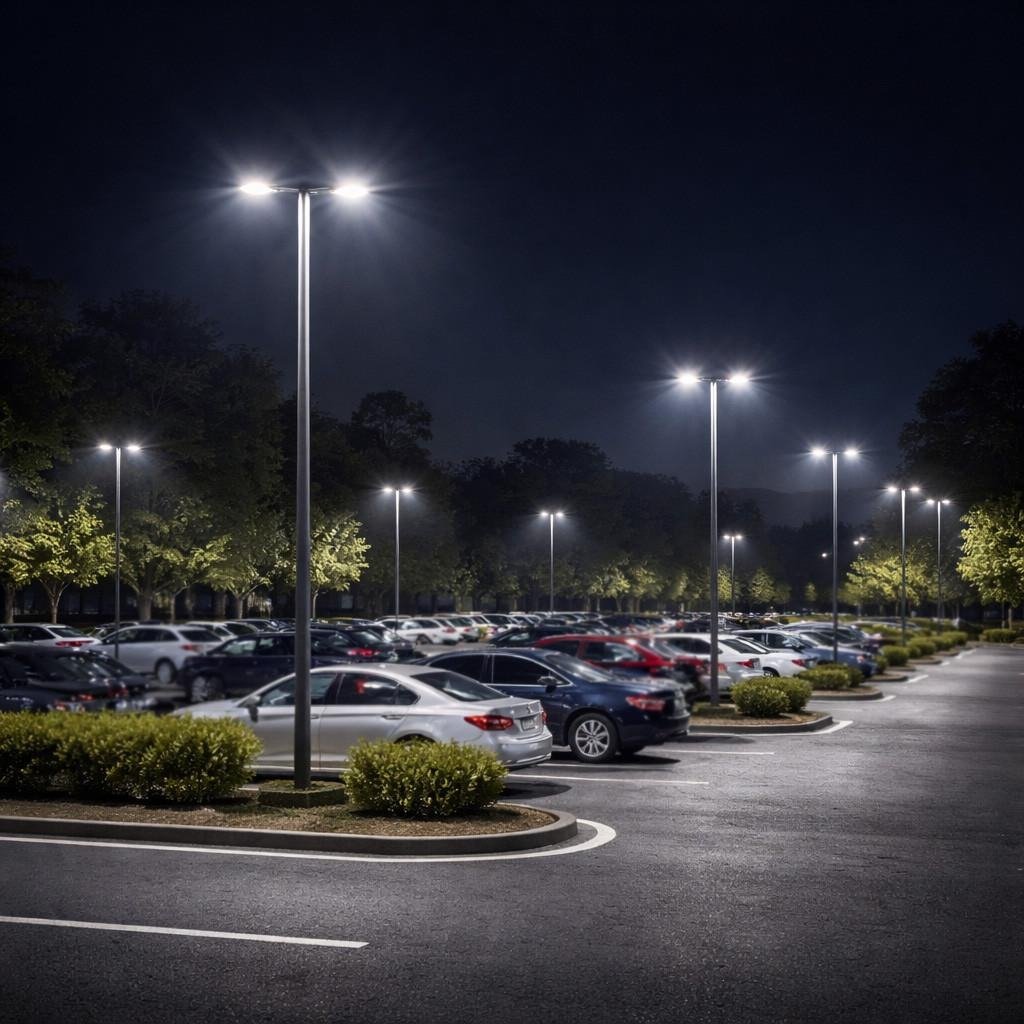
Parking lot lighting improves visibility for drivers and pedestrians, helping reduce trips, collisions, and other nighttime accidents. It also discourages criminal activity by eliminating dark areas and making people, vehicles, and surroundings easier to see.
Introduction
Parking lot lighting plays an important role in keeping commercial and public spaces safe after dark. Well-designed lighting helps drivers see lanes, parked vehicles, pedestrians, curbs, and potential obstacles more clearly, reducing accident risk. At the same time, adequate illumination can make parking areas less attractive to criminals by reducing dark corners and improving visibility around entrances and vehicles. However, effective lighting involves more than simply installing bright fixtures. Proper placement, coverage, brightness, energy efficiency, and regular maintenance all contribute to a safer environment. For businesses and property owners, investing in reliable parking lot lighting can improve both safety and security.
Why Proper Parking Lot Lighting Matters
Effective lighting improves visibility across driving lanes, parking spaces, sidewalks, and entrances. When people can clearly see their surroundings, they can react sooner to moving vehicles, pedestrians, obstacles, and uneven surfaces. Professional parking lot lighting services can help businesses create balanced illumination instead of simply adding brighter fixtures without considering coverage or placement.
How Lighting Helps Prevent Parking Lot Accidents
Accidents can happen when drivers cannot see pedestrians, parked cars, lane markings, curbs, or unexpected obstacles clearly. Consistent illumination gives drivers more visual information while maneuvering. Likewise, pedestrians can identify walking routes and surface changes more easily. Properly designed parking area lighting therefore supports safer movement throughout busy properties.
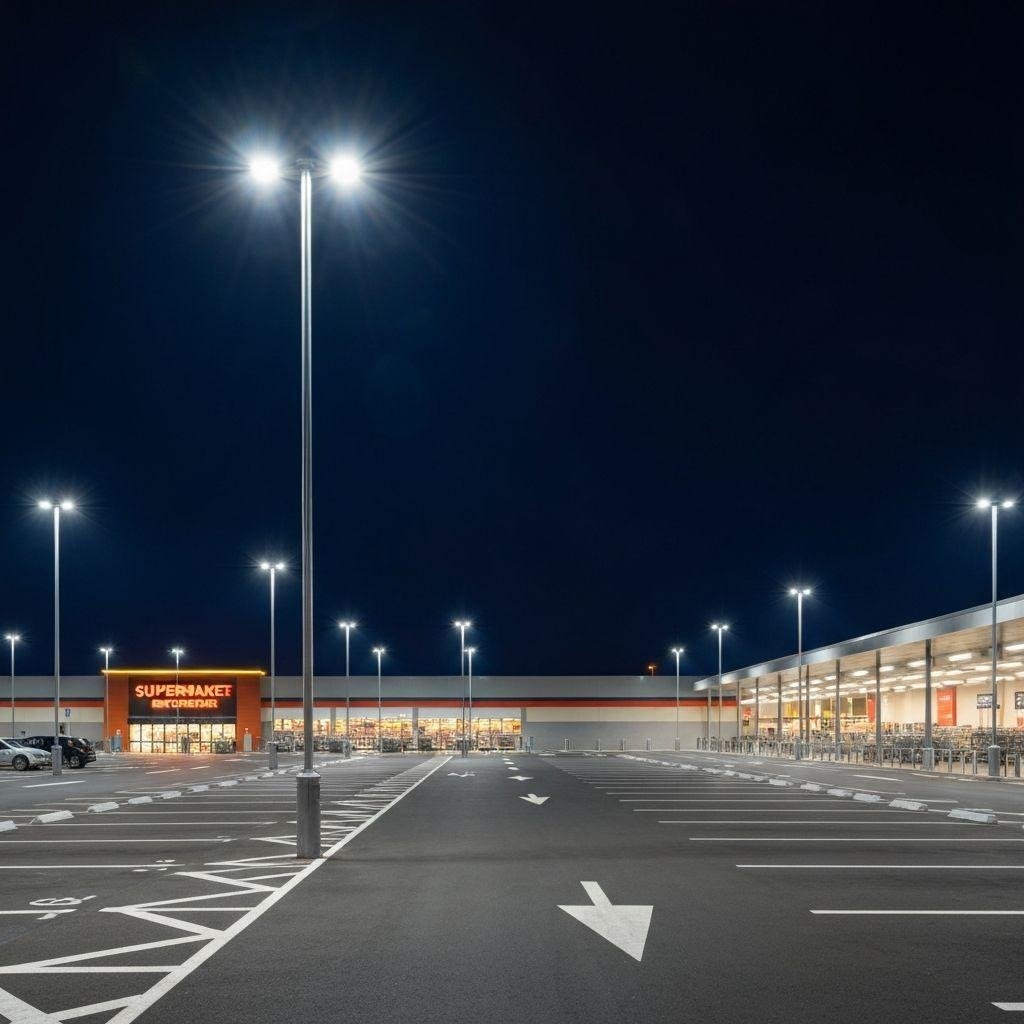
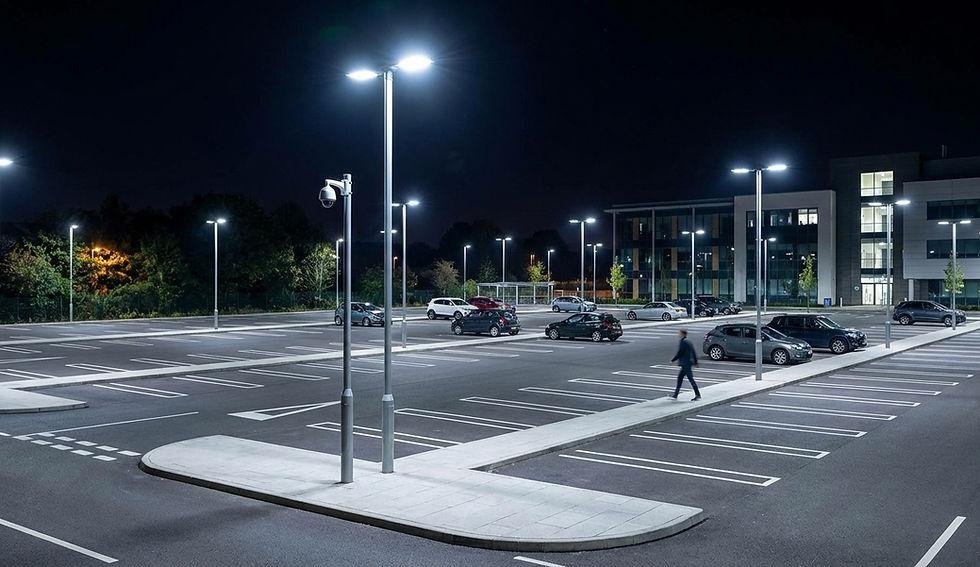
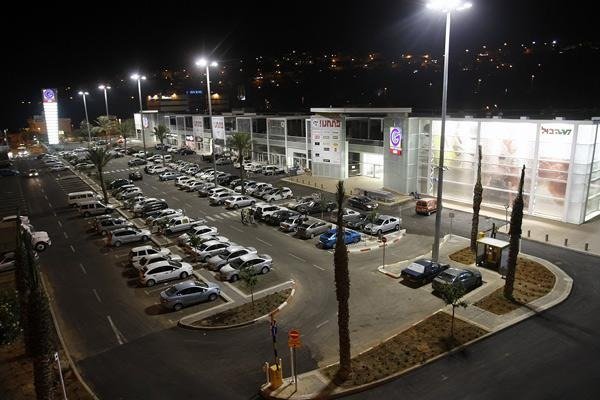
Reduce Dark Spots With Strategic Light Placement
Dark pockets between buildings, vehicles, landscaping, and light poles can reduce visibility even when a parking lot appears bright overall. Professional designers consider pole height, fixture distribution, mounting locations, and surrounding structures to improve uniformity. This approach helps minimize harsh contrasts and provides more predictable visibility throughout the property.
- Place fixtures to cover pedestrian routes and driving lanes.
- Illuminate entrances, exits, corners, and high-traffic areas.
- Check areas blocked by trees, signs, buildings, or structures.
- Replace failed fixtures promptly to maintain consistent coverage.
Improve Security With Consistent Illumination
Lighting can support security by making people, vehicles, and activity easier to see after dark. A consistently illuminated property may provide fewer concealed areas for unwanted activity. However, lighting does not eliminate crime by itself. Instead, it works as one practical layer alongside cameras, access controls, alarms, and responsible property management.
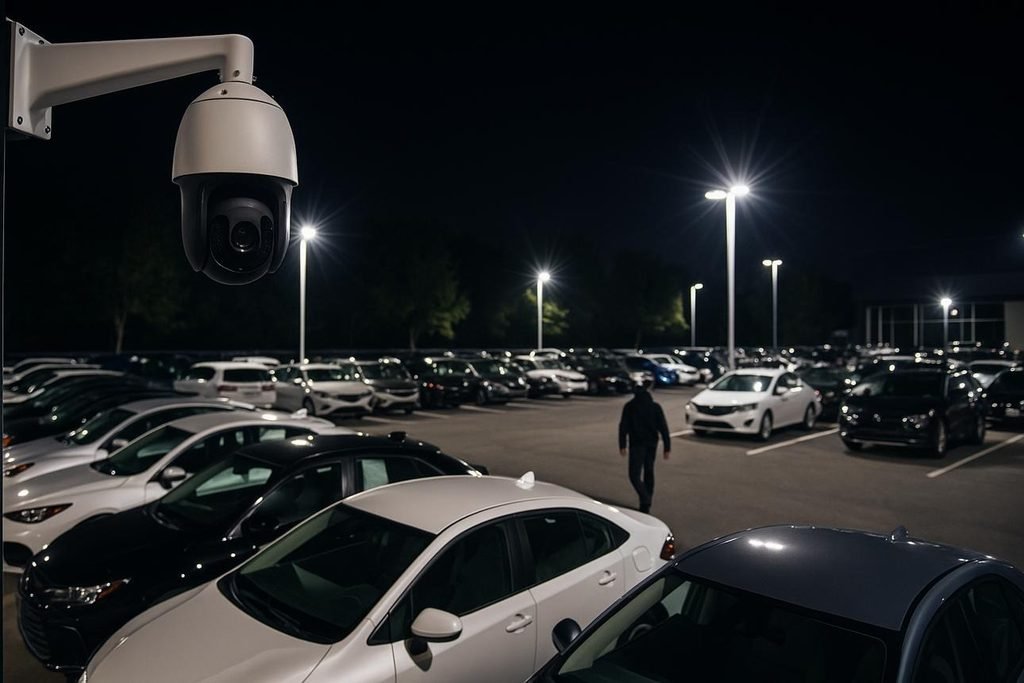
Support Security Cameras After Dark
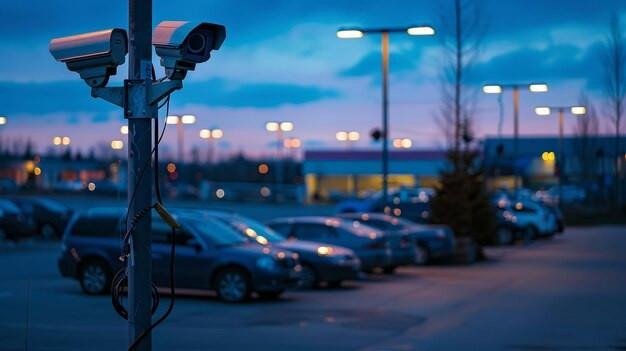
Security cameras perform more effectively when the surrounding area has suitable illumination. Poor lighting can make subjects difficult to distinguish, while excessive glare can also reduce image quality. Properly planned Commercial parking lot lighting can help provide useful visibility around entrances, driveways, pedestrian areas, and parking spaces where surveillance coverage is important.
Make Parking Areas More Comfortable for Visitors
People generally feel more comfortable navigating a property when they can see where they are going and understand their surroundings. Brightness alone is not the goal; balanced, controlled illumination matters. Quality Outdoor parking lot lighting can make entrances, walkways, and parking spaces easier to recognize without creating unnecessary glare or visual discomfort.
Choose Fixtures Designed for Outdoor Conditions
Parking lot fixtures face weather, temperature changes, dust, moisture, and occasional physical impact. Therefore, selecting durable equipment matters for long-term performance. During Parking lot light installation, professionals can evaluate fixture specifications, mounting locations, electrical connections, and environmental exposure to create a system suited to the property rather than using one generic solution.
Consider LED Lighting for Efficiency and Reliability
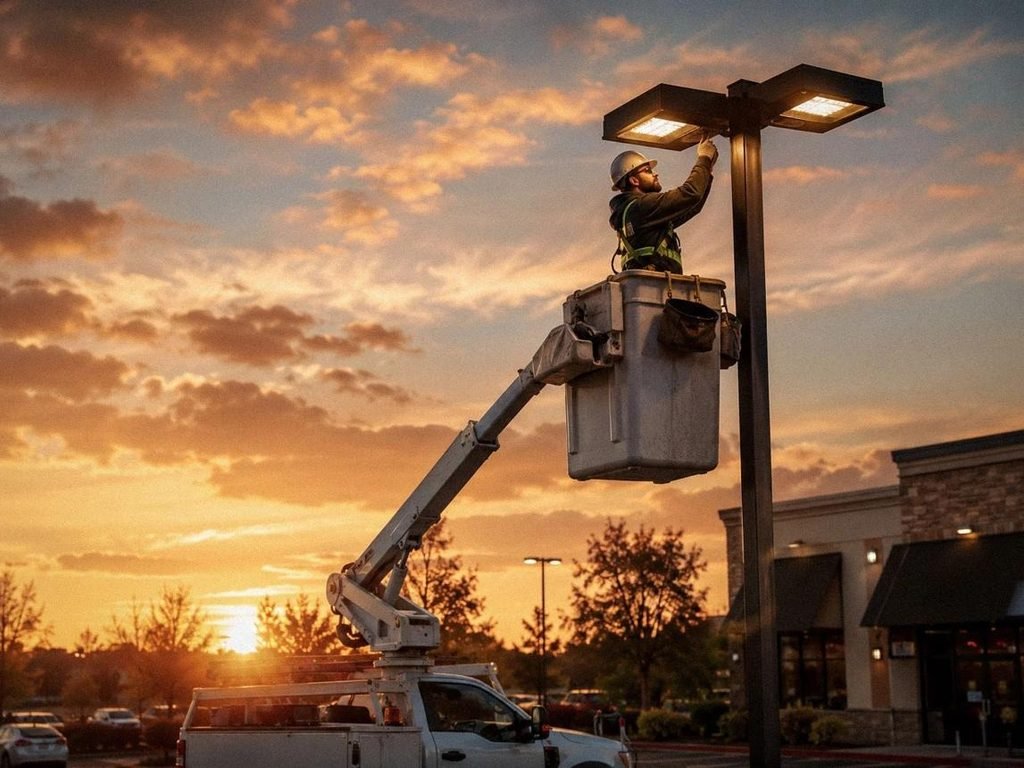
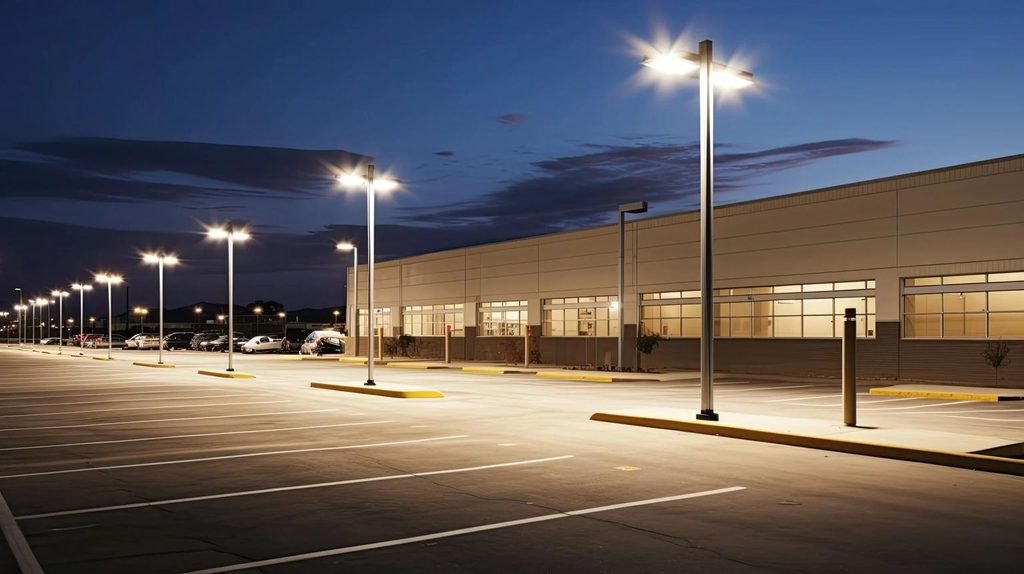
LED fixtures can provide strong illumination while supporting lower energy consumption and reduced maintenance compared with many older lighting technologies. Gorilla MKT Signs notes that parking lot lighting may operate for 12 to 24 hours daily and highlights LED upgrades as an energy-saving opportunity. Actual savings depend on equipment and operating conditions.
Plan Lighting Around Traffic and Pedestrian Flow
Every parking property has different movement patterns. Retail centers may experience heavy customer traffic, while offices may have employee arrivals and departures concentrated around certain hours. Warehouses may require stronger visibility near loading areas. A thoughtful Parking lot lighting installation should account for vehicle lanes, pedestrian routes, entrances, exits, and frequently occupied spaces.
- Evaluate high-traffic areas before selecting fixture locations.
- Consider sidewalks, crossings, ramps, and building entrances.
- Review landscaping and structures that may create shadows.
- Account for future property changes when planning coverage.
Maintain Your Lighting Before Problems Grow
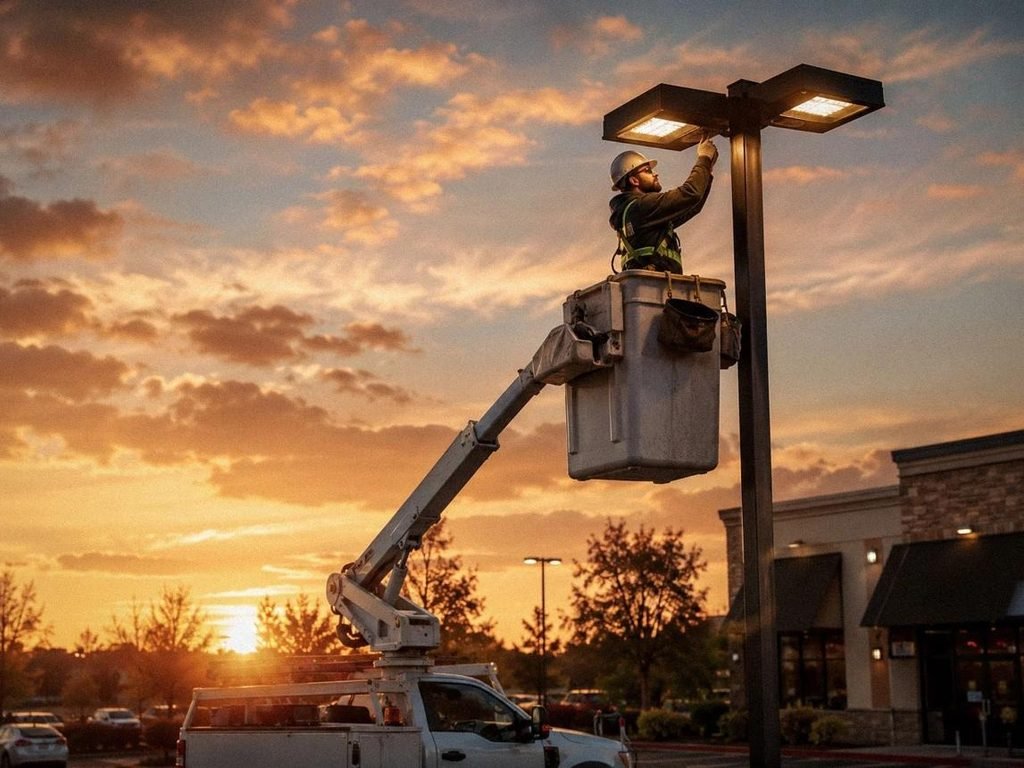
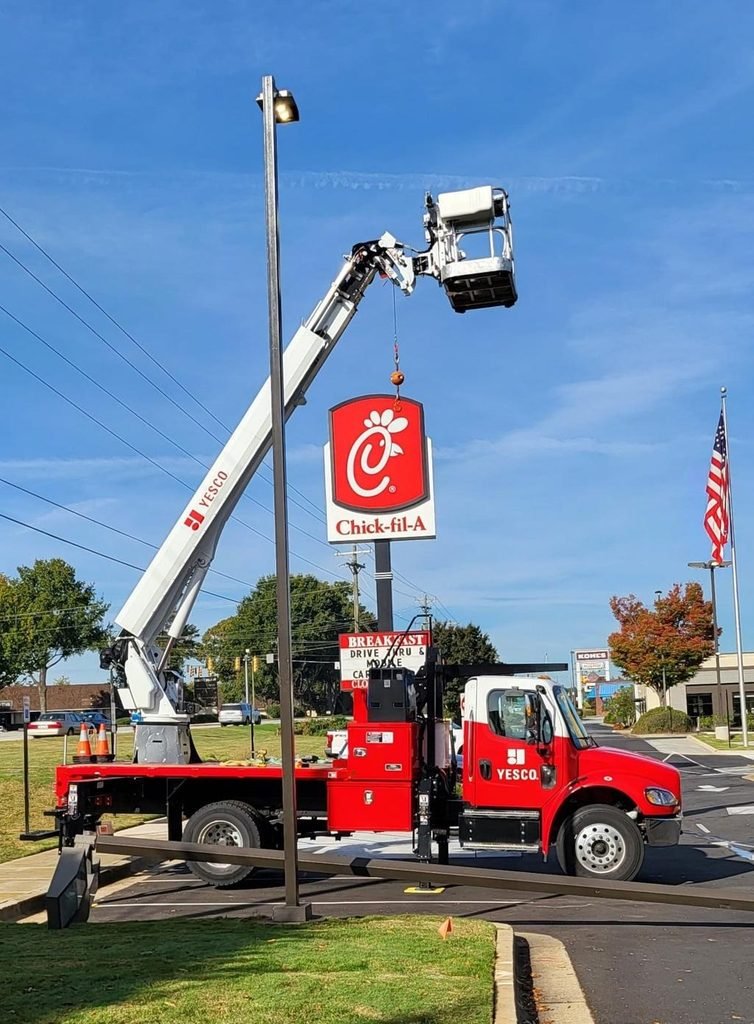
Even a well-designed system can become less effective when lamps fail, lenses become dirty, wiring develops problems, or fixtures shift from their intended positions. Routine inspections help property managers identify issues before they create larger visibility gaps. Professional maintenance can also verify performance and keep the lighting system operating consistently throughout the year.
Upgrade an Aging System With Professional Help
Older lighting systems may have outdated fixtures, uneven coverage, frequent failures, or unnecessarily high operating costs. A professional evaluation can identify these weaknesses and determine whether repairs, fixture replacements, or a complete upgrade make sense. A proper assessment should consider lighting performance, electrical conditions, property layout, maintenance needs, and long-term operating goals.
Create a Safer, Better-Lit Property Today
Parking lot lighting should be treated as an important part of a property’s overall safety and usability strategy. Professional planning can improve visibility for drivers and pedestrians, support security cameras, reduce dark areas, and create a more welcoming environment.
Final Thoughts
Effective parking lot lighting is an important part of creating safer, more secure properties after dark. Properly positioned and well-maintained lights improve visibility for drivers and pedestrians while reducing poorly illuminated areas that may create safety or security concerns. In addition, energy-efficient lighting solutions can provide dependable illumination while helping control operating costs. Choosing the right fixtures, placement, and maintenance plan can make a meaningful difference in overall parking lot safety.
FAQs
Q: Can parking lot lighting help prevent accidents?
A: Yes. Proper lighting improves visibility for drivers and pedestrians, helping them spot vehicles, obstacles, curbs, and other hazards.
Q: Does parking lot lighting prevent crime?
A: Good lighting reduces dark areas and improves visibility, supporting security when combined with cameras, alarms, and access controls.
Q: Why is lighting uniformity important in parking lots?
A: Uniform lighting reduces harsh shadows and dark spots, making pedestrians, vehicles, and obstacles easier to see.
Q: Is LED lighting suitable for commercial parking areas?
A: Yes. LED lighting provides consistent illumination, uses energy efficiently, and generally requires less maintenance.
Q: How often should parking lot lights be inspected?
A: Regular inspections help identify outages, damage, dirty lenses, and wiring issues before they become bigger problems.
Q: What should be considered before parking lot light installation?
A: Consider property size, traffic patterns, pole locations, fixture types, light distribution, electrical needs, and local requirements.
Q: Can lighting improve security camera visibility?
A: Yes. Proper lighting can help cameras capture clearer images, especially near entrances, driveways, and monitored areas.
Q: When should a business consider replacing its parking lot lighting?
A: Frequent outages, uneven lighting, high energy use, and recurring repairs may indicate that an upgrade is needed.